
Ground Hog Day
Zelensky's furry good speech

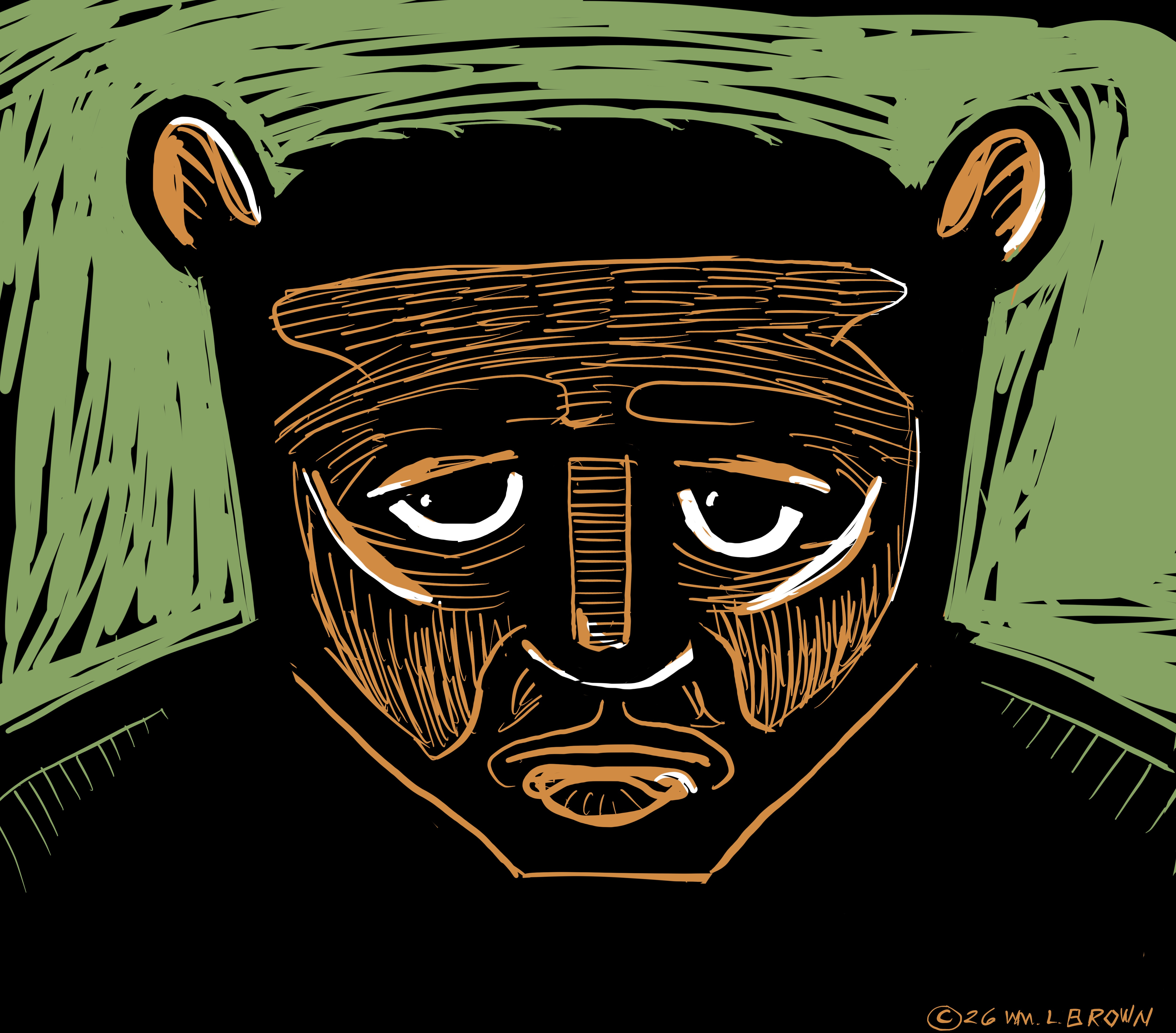
Ground Hog Zelensky, ©2026, William L. Brown
The so-called Energy Ceasefire arranged by US President Trump seems to have held through the weekend for what it is worth. Russian bombs killed a dozen miners and wounded 16 more on a bus. Ukraine bombed a military production facility. These attacks don’t “count” for the ceasefire as the targets were not energy infrastructure.
Ukrainian civilians continue to deal with electricity, heat and water outages in below-freezing temperatures, -5°F in the wee hours of February 2. Forecasts say it will remain below freezing all this week.
Trump called for a week’s ceasefire. Putin said it would end on Sunday Feb. 1. So, Russia may soon resume attacks on energy infrastructure.
Ukraine President Volodymyr Zelensky spoke at the Davos Conference January 22, 2026.
Dear friends, everyone remembers the great American film, Groundhog Day, with Bill Murray and Andy McDowell, yes, but no one would want to live like that, repeating the same thing for weeks, months, and, of course, for years.
And yet, that’s exactly how we live now. It’s our life and every Forum like this one proves it. Just last year, here in Davos, I ended my speech with the words, “Europe needs to know how to defend itself.” A year has passed and nothing has changed. We are still in a situation where I must say the same words, but why?
New challenges emerge every year, he said, but Europe is unprepared to meet them decisively. Europe dealt with US demands to annex Greenland by “waiting for America to cool down on this topic, hoping it will pass away.”
In the Western Hemisphere, said Zelensky, the United States arrested Venezuelan president Madura and put him on trial in New York.
But in Europe Putin is not on trial, though he’s biggest war criminal on that continent since World War II. “It’s Putin who’s trying to decide how the frozen Russian assets should be used, not those who have the power to punish him for this war.” Putin stopped Europe from turning those assets over to Ukraine.
Even though there is an agreement, said Zelensky, to establish a tribunal on Russian aggression, nothing has been done about it. “Too often in Europe, something else is always more urgent than justice.”
He thanked European countries who have stepped forward to be the Coalition of the Willing, the security force pledged to enforce peace following a ceasefire, if negotiations are successful. But, Europe’s security guarantees are toothless without US backup. Again, Europe depends on the US because it has not developed the resources to act on it's own.
But what about the ceasefire itself? Who can help make it happen? Europe loves to discuss the future, but avoids taking action today, action that defines what kind of future we will have. That is the problem.
Zelensky’s speech followed Canadian Prime Minister Mark Carney’s eye-opening “Rupture” speech at Davos. Carney warned that the old rules-based world order has ended, and the great powers seek to replace it with strength-based order—the strong countries boss the weaker ones. The old order was not perfect, said Carney. Strong powers could ignore the rules when it suited them.
Now, it’s up to the middle-countries, said Carney, to unite and push. Zelensky’s speech calls on the Europe to do this, to stop finding excuses to avoid action. Taking action is risky, but as Carney said, ““If we’re not at the table, we’re on the menu,”
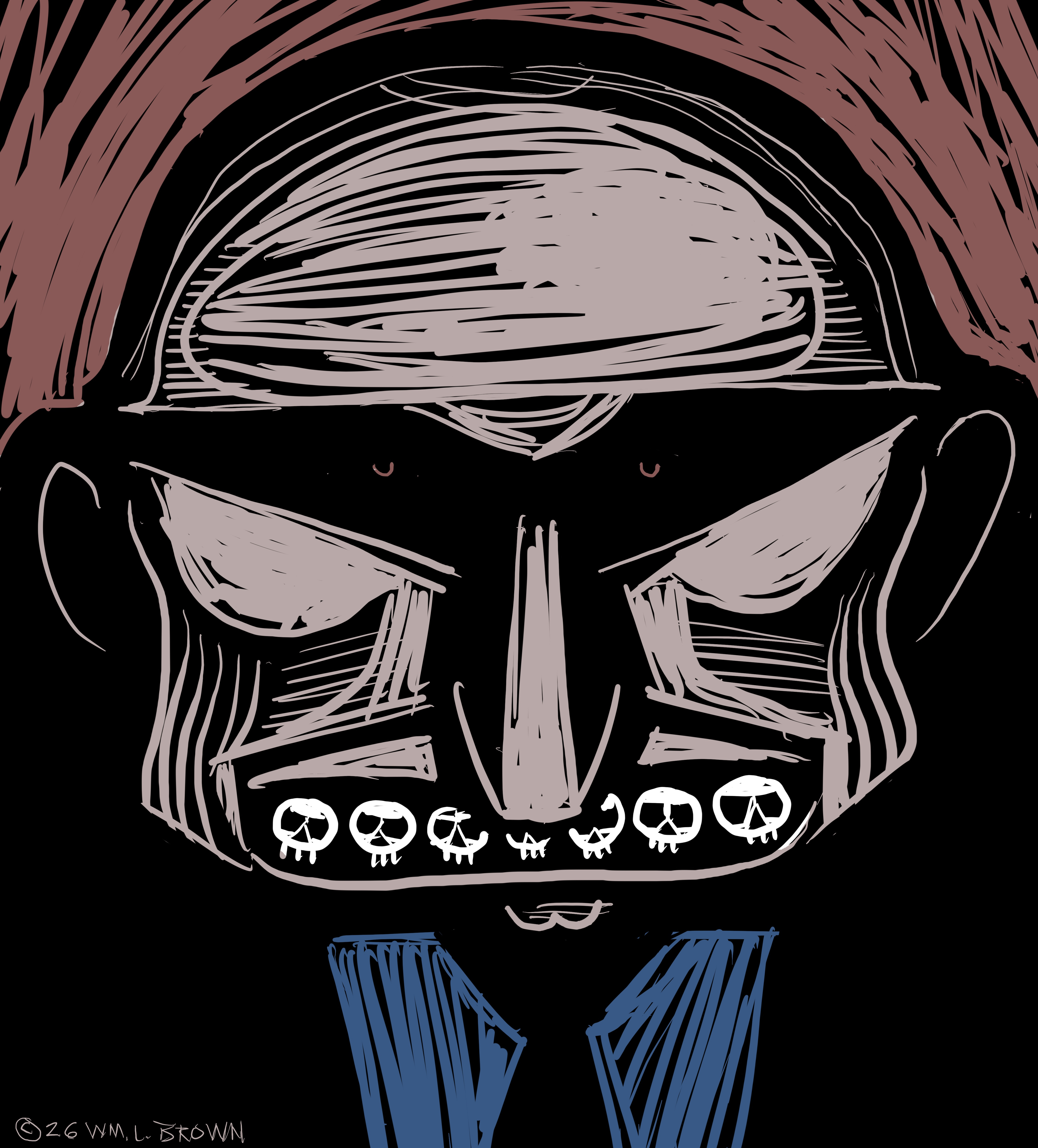
From Putin’s Mouth, ©2026, William L. Brown.
The Russia military death rate in Ukraine has been averaging an estimated 1000 a day due to Russia’s “meat-grinder” battle tactics. in his Davos speech January 22, President Zelensky claimed 35,000 Russians died in December. All this for average gains of 230 feet per day on the hotly contested small city of Pokrovsk, Donetsk Oblast. NBC News cites numerous sources, not all in agreement.
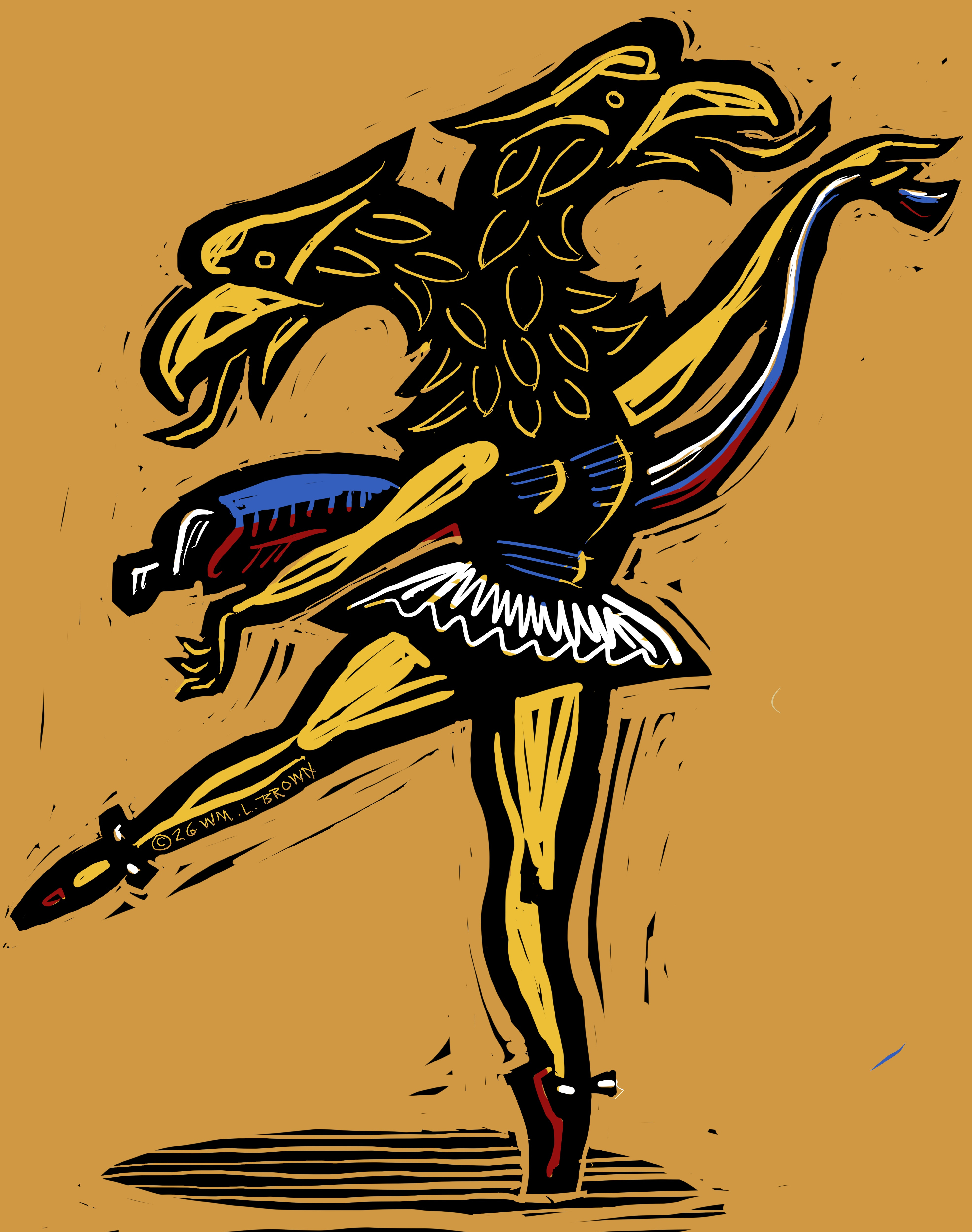
Imperial Culture, ©2026 William L. Brown.
Even as Russia commits daily war crimes, it presents it’s culture as superior, especially to cultures of nations the Russian Empire has subjugated, such as Ukraine. Westerners, such as this disdainful Italian, are not as attuned to this as Eastern Europeans, and are surprised and dismissive when controversies erupt over Russian theatre, ballet and music presentations, especially if they feature Russian artists.
German culture and artists earned similar criticism during WWII. American culture was reassessed during the Vietnam War and the Civil Rights Era. Gone With the Wind, for example. Similarly, Ukrainians find offensive attitudes in Russian arts.
It’s not just the that it is an enemy’s culture. Ukrainians’ experience is similar to Native Americans’. Russia stole their land, massacred them by the millions and tried to wipe out their language, customs, and national identity. They colonized the country with Russians, and in some cases forcibly removed entire ethnic groups such as Crimeans to far away regions.
After independence, Ukraine embarked on a large national program to “de-communize” and “de-Russify” their geography, society and minds: schools, institutions, parks, streets, squares, city and place names, all named for Soviet and Russian “heroes,” writers, musicians, artists or scientists.
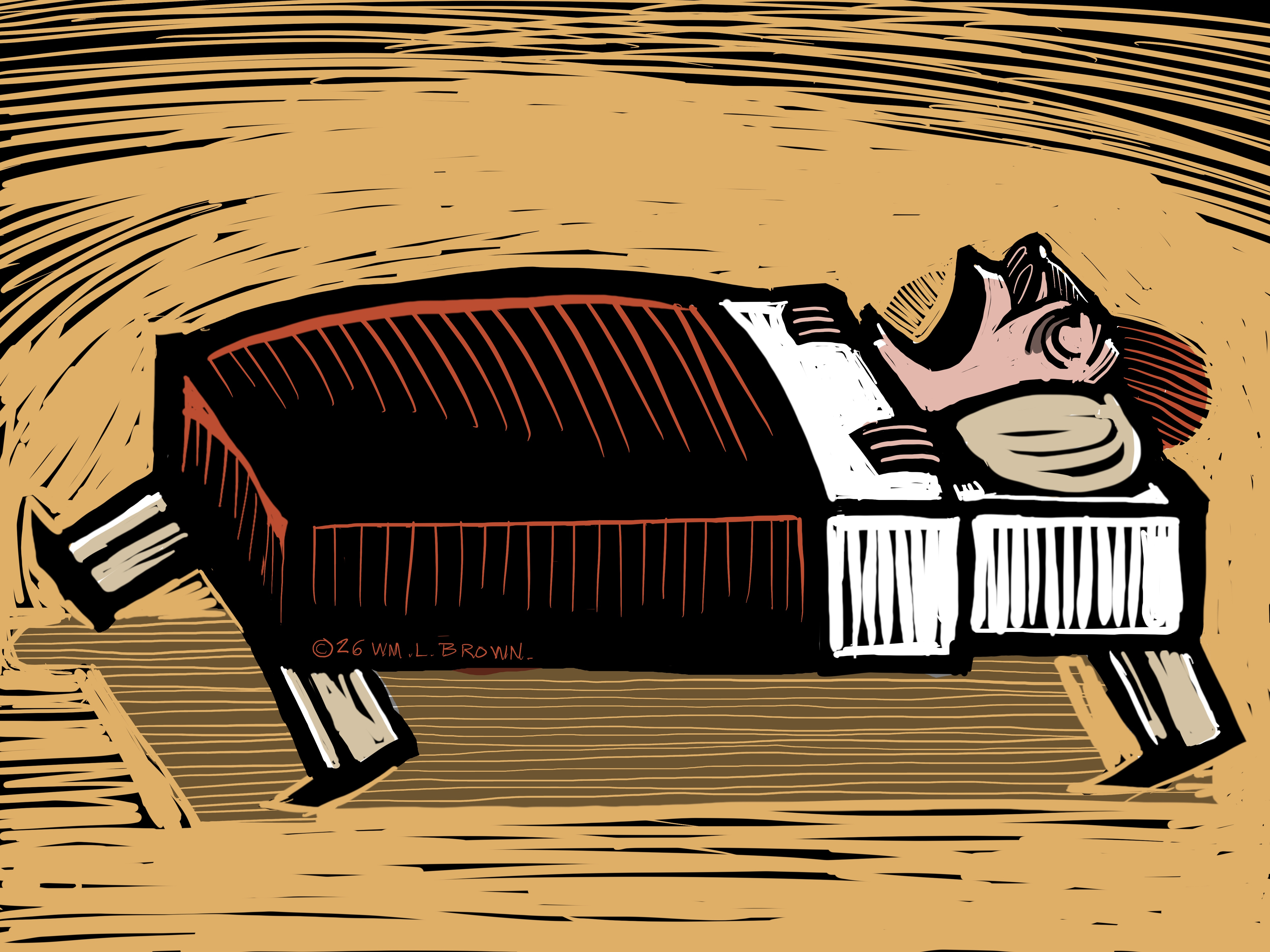
Fatigue, ©2026 William L. Brown.
The war, the weather, the dark of winter — it’s all exhausting. But, we keep moving somehow.
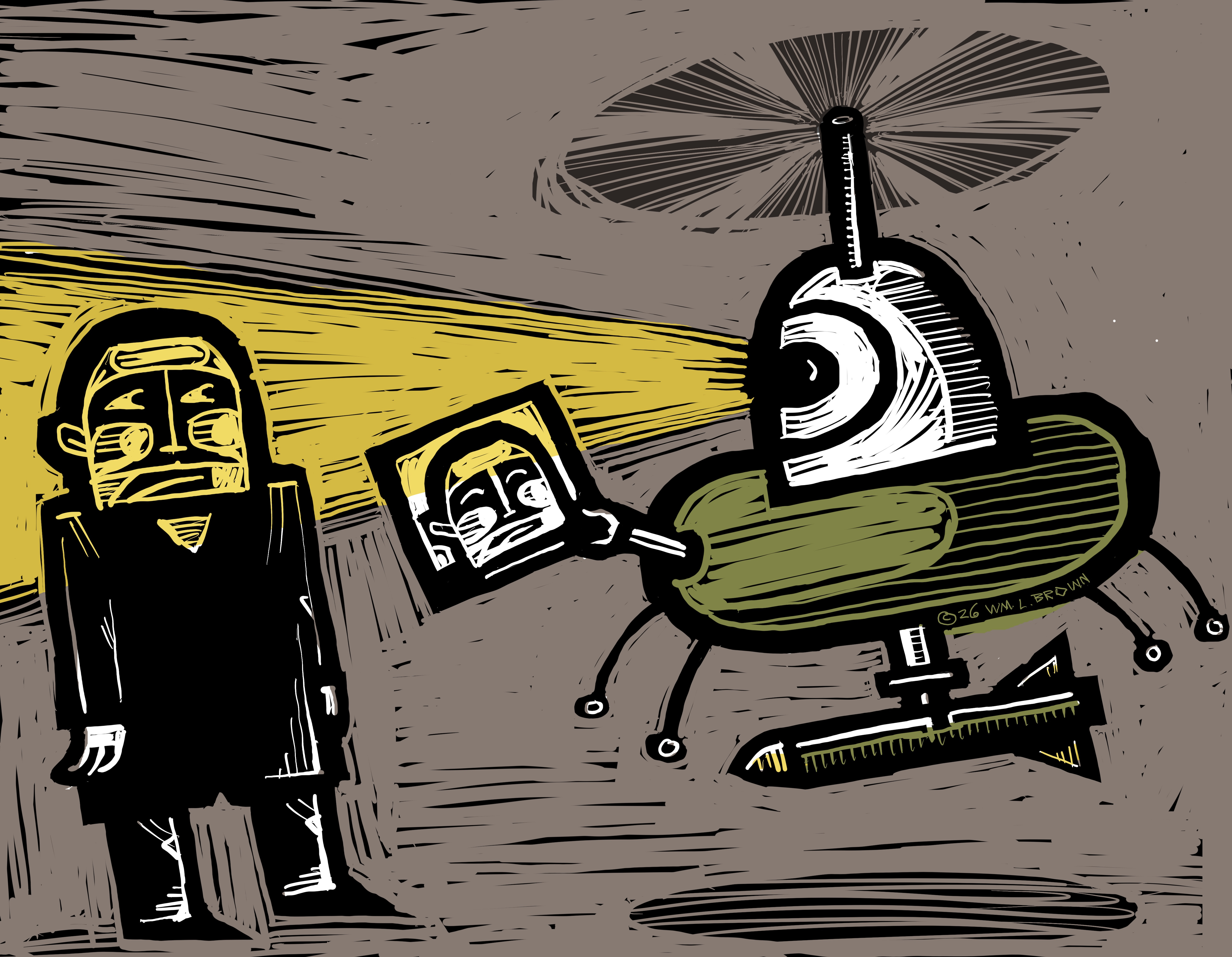
Drone Recognition, ©2026 William L. Brown
When drones are in the innovative hands of Ukrainians outwitting the Russians, we love them. But, we don’t love the idea of drones being used by more sinister powers. Advancement in drone technology, such as recent work in matching weaponized drones with face-recognition software, is disquieting.